
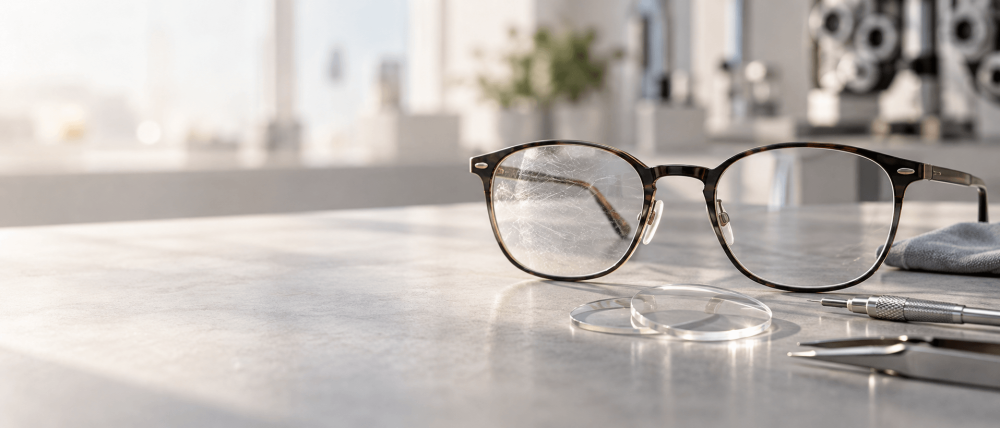
Have you started noticing scratches on your prescription glasses lenses? Or has your vision become less clear despite cleaning them regularly? These signs may indicate that it's time to replace your prescription glasses lenses, but that doesn't necessarily mean you need to buy an entirely new pair of glasses.
In some cases, replacing the lenses while keeping your current frames is enough, while other situations may require replacing the entire pair. The decision depends on the condition of your lenses, the durability of your frames, and whether your current prescription is still suitable. In this article, we'll explain the signs to watch for and the steps that can help you make the right decision.
What Are the Signs That You Need to Replace Your Prescription Glasses Lenses?
The need to replace your lenses doesn't depend only on how long you've been using them, but also on their condition and how they affect your vision. Here are the most common signs:
1. Visible Scratches on the Lenses
Deep or widespread scratches on prescription glasses lenses may affect visual clarity, especially when exposed to direct light. However, minor surface scratches don't always require immediate replacement, as long as they don't interfere with everyday use.
2. Damage to the Anti-Reflective Coating
You may notice peeling or permanent spots that don't disappear with cleaning. Sometimes, this is caused by damage to the anti-reflective coating, which can reduce lens clarity and increase distracting reflections.
3. Cracks or Visible Lens Damage
Cracks or small fractures, especially near the edges of the lenses, should be evaluated by a specialist. Such damage may affect the safety of the lenses and how securely they fit within the frame.
4. Persistent Blurry Vision and Eye Strain
If you experience difficulty focusing or blurry vision despite having clean lenses, the cause may be a change in your prescription or another issue. Therefore, it's better to have an eye examination rather than assume the lenses are damaged.
5. Changes in Your Vision Prescription
When an eye examination confirms that you need a new prescription, updating your lenses may become necessary to achieve the appropriate vision correction, even if your old lenses are still in good condition.
Should You Replace Only the Lenses or Get a New Pair of Prescription Glasses?
You don't necessarily need to buy a completely new pair of glasses every time your lenses become damaged. The best option depends on the condition of your frames and your personal needs.
When Is Replacing Only the Lenses Enough?
Replacing the lenses can be a suitable option when:
- Your current frames are in good condition, comfortable, and fit securely on your face.
- You need to update your prescription and compatible lenses can be fitted into your existing frames.
- Your lenses have scratches or coating damage while the frames remain in good condition.
- You want to keep your favorite frames without changing their design.
When Is Getting New Prescription Glasses a Better Option?
Buying a new pair of prescription eyeglasses may be more suitable if your frames are broken, worn out, no longer fit your face properly, or are incompatible with the new lenses you need.
You may also prefer a new frame that offers a different design and better comfort.
Most importantly: Compare the total cost of both options after evaluating your frames and lenses, as replacing the lenses alone is not necessarily the less expensive choice in every situation.
How Are Prescription Glasses Lenses Replaced?
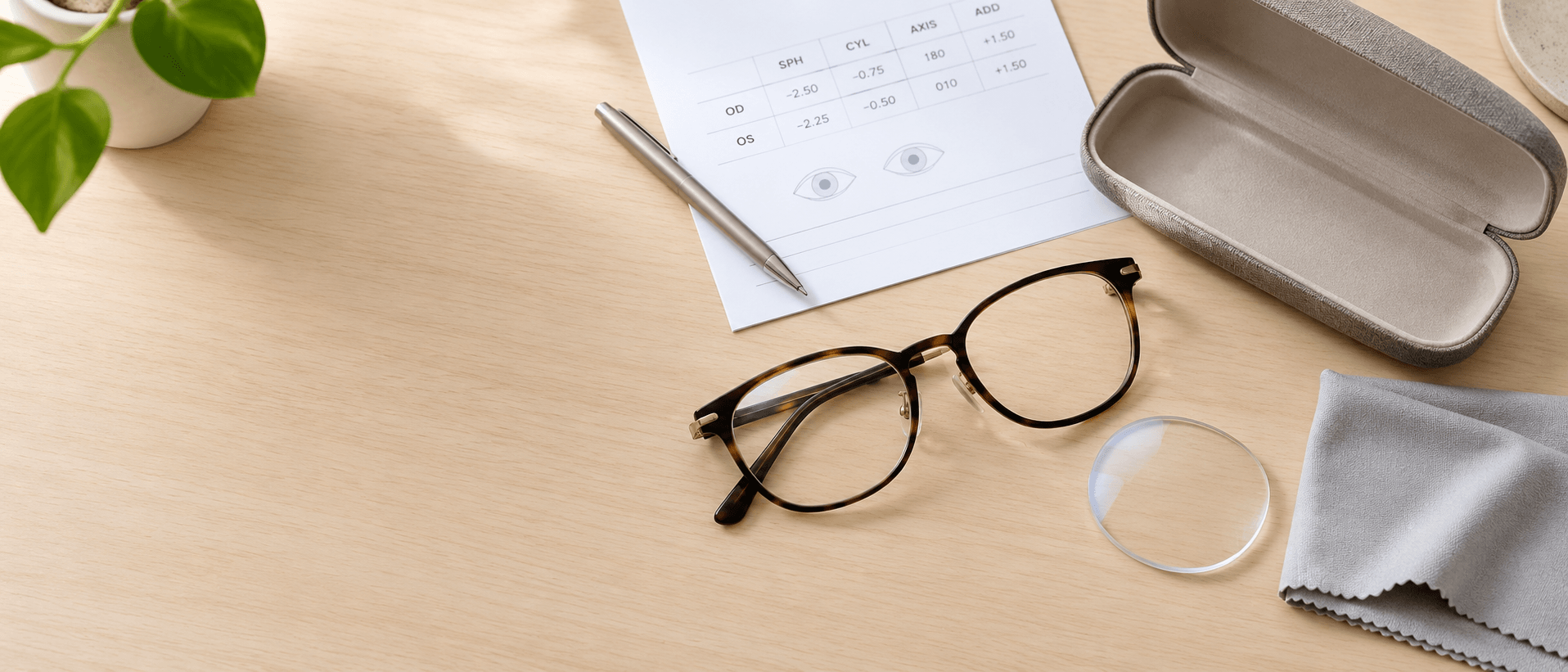
The process of replacing prescription glasses lenses involves several steps to ensure a proper fit:
- Eye Examination: Confirm that your current prescription is still suitable or update it if necessary.
- Frame Inspection: Evaluate the durability of your frames and whether new lenses can be installed.
- Lens Selection: Choose the appropriate prescription, lens material, and coatings based on your vision needs and daily activities.
- Installation and Adjustment: Have a specialist cut and install the lenses and adjust the frames.
- Final Fitting: Make sure your vision is clear and your glasses feel comfortable and secure.
Avoid attempting to remove or force new lenses into your frames at home, as this may break the frames or damage the new lenses.
How Can You Make Your Prescription Glasses Lenses Last Longer?
Proper daily care helps reduce scratches and premature damage. To keep your lenses in good condition:
- Use a clean microfiber cloth and a suitable lens-cleaning solution.
- Avoid wiping dry lenses when dust or dirt is present.
- Don't use clothing or rough paper tissues to clean your lenses.
- Avoid leaving your glasses inside a car in high temperatures.
- Store your glasses in a protective case when not in use.
It's also preferable to hold your glasses by the sides of the frame rather than frequently touching the lens surfaces.
Where Should You Start When You Need to Replace Your Prescription Glasses Lenses?
If you notice a decline in visual clarity, start with an eye examination when necessary, then have your lenses and frames evaluated to determine the most suitable solution.
Replacing your prescription glasses lenses may be enough to restore clear vision while keeping your existing frames, or you may find that choosing a new pair of glasses better meets your needs.
You can explore prescription lens customization options or browse the collection of prescription glasses at Okyali, comparing the available options before making your purchase decision.